
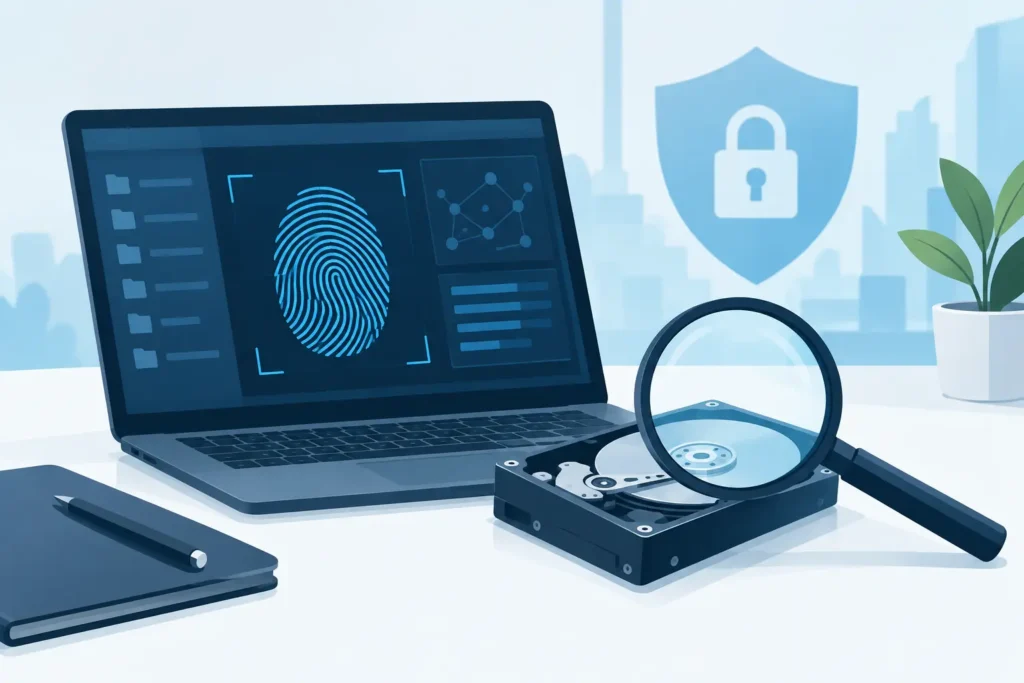
A failed laptop, deleted messages or a damaged CCTV recorder can become far more than an IT problem within hours. The question is not only whether the data can be recovered, but whether it can be trusted. Digital forensics is the disciplined process of preserving, examining and reporting electronic evidence so that its integrity can be demonstrated when it matters.
For a business facing suspected fraud, an employer handling a workplace dispute, or a family needing to establish what happened to critical files, ordinary recovery is not always enough. The way a device is handled from the first moment can affect an internal investigation, an insurance claim, a legal matter and the privacy of everyone involved.
What digital forensics actually does
Digital forensics applies controlled technical methods to computers, mobile phones, storage media, servers, cloud accounts and video systems. The objective is not simply to find files. It is to establish what data exists, when it was created or changed, where it came from and whether it has been altered during examination.
A forensic examiner normally works from a verified copy of the original evidence rather than repeatedly opening and using the original device. This protects the source media and provides a reproducible basis for analysis. Cryptographic hash values are used to confirm that the acquired image matches the original at the point of capture. If the values match, the copy can be shown to be unchanged.
That distinction is vital. A standard recovery process may be perfectly suitable when the goal is to retrieve holiday photographs or restore a deleted spreadsheet. A forensic process adds evidence preservation, documented handling and defensible reporting. It is designed for situations where the findings may be challenged by management, solicitors, insurers, regulators or a court.
Why evidence can disappear during ordinary use
Many people assume that switching on a device to have a quick look is harmless. It often is not. Modern operating systems constantly write temporary files, update logs, synchronise cloud data and modify metadata. On an SSD, background commands such as TRIM can make deleted data far harder, and sometimes impossible, to recover.
Mobile phones create similar risks. A mobile phone may receive new messages, install an update, encrypt itself after repeated unsuccessful passcode attempts or remotely wipe after connecting to a network. CCTV systems frequently overwrite footage on a rolling cycle. A recorder that keeps seven days of video may have already overwritten the critical period before anyone realises it needs preserving.
This is why the first response should be measured rather than frantic. Avoid installing recovery software, running repair utilities, formatting drives, factory-resetting mobile phones or allowing a damaged device to keep operating. Record the date, time and circumstances of the incident, identify who has handled the device and keep it secure. Those details form the beginning of a credible chain of custody.
The forensic process: preservation before interpretation
A professional examination begins with controlled intake and documentation. The device, its condition, identifying details and the person transferring it are recorded. Depending on the device and circumstances, the examiner may photograph it, isolate it from networks and assess whether specialist recovery is needed before any data can be acquired.
Acquisition without changing the source
Forensic acquisition varies by device. A conventional hard drive may be copied through a write-blocking process that prevents any data being written back to the original. A failing drive may require stabilisation and recovery in a specialist laboratory before a complete image can be created. RAID and NAS systems require particular care because the order of disks, controller configuration and parity layout can determine whether the data is reconstructed correctly.
Mobile phones, encrypted laptops and cloud environments present different challenges. Access may depend on lawful authority, credentials, encryption keys, device condition and the version of the operating system. There is no single tool that works on every case, and anyone promising guaranteed access before assessment should be treated carefully.
Analysis that answers a specific question
The examination should be guided by the issue at hand. An employer may need to establish whether confidential documents were copied to a USB device. A company director may need to investigate suspected deletion of accounting records. A solicitor may need a timeline of communications, photographs or location data. A CCTV case may focus on whether video is authentic, complete and correctly time-stamped.
Examiners can recover active and deleted files, inspect file-system artefacts, analyse user activity, review browser records, identify connected devices and build timelines from multiple sources. They also assess context. A file name alone rarely proves intent. Dates can be affected by system clocks, copying activity and application behaviour, so conclusions should be clear about what the evidence supports and where uncertainty remains.
Reporting that can withstand scrutiny
A useful forensic report explains the methods used, devices examined, findings, limitations and the basis for each conclusion. It should distinguish fact from interpretation. It should also retain information needed for another qualified examiner to understand and, where appropriate, reproduce the work.
This level of documentation matters even where litigation is not expected. It gives management a reliable record for disciplinary decisions, incident response, regulatory discussions and future investigations. It also prevents an expensive exercise in data collection from producing information that cannot be confidently relied upon.
Digital forensics and data recovery are related, not identical
The two services often overlap. Physical failure, corruption or accidental deletion may prevent access to evidence, so recovery expertise can be the first requirement. A failed hard drive containing potentially relevant records cannot be forensically analysed until the underlying data is safely recovered.
However, recovery alone does not automatically create forensic evidence. If a damaged drive is repaired, files extracted and returned without documented acquisition, hashing and handling records, the material may still be valuable operationally but may not carry the same evidential weight. Conversely, a strictly forensic image is of limited use if it cannot be created because the device has suffered mechanical or electronic failure.
The right approach depends on the purpose. If you need irreplaceable personal photos returned, a recovery-focused process may be proportionate. If the contents could affect a dispute, investigation or allegation, ask for forensic preservation from the outset. Data Recovery Lab combines specialist recovery capability with forensic-grade handling when the condition of the media and the sensitivity of the matter demand both.
When to request forensic handling immediately
Forensic handling is usually the safer choice when there is a credible prospect of legal action, employee misconduct proceedings, fraud investigation, intellectual-property theft, cyber incident, disputed communications or regulatory scrutiny. It is also appropriate where the data involves sensitive personal information, commercially confidential material or potentially significant CCTV footage.
Speed matters, but speed should not mean shortcuts. Emergency work can be prioritised while still documenting custody, protecting confidentiality and verifying each acquisition. A provider should be able to explain who will handle the media, where it will be stored, what information will be supplied and how your data will be protected throughout the process.
For organisations, early action also reduces the scope of the incident. Preserve affected devices, suspend automatic deletion where possible, retain relevant backups and avoid allowing staff to continue using systems that may contain evidence. Do not circulate copies of potentially sensitive material unnecessarily. Each additional copy creates another security and disclosure risk.
Confidentiality is part of the technical standard
Forensic work frequently exposes highly personal or commercially sensitive material: private chats, payroll records, legal documents, customer data, medical information and internal communications. Technical competence means little if confidentiality is treated casually.
Look for secure physical handling, controlled access, clear retention arrangements and GDPR-compliant processes. Ask whether the original media will be returned, how recovered data will be supplied and how long working copies are retained. A trustworthy laboratory should answer directly, without vague assurances or surprise charges.
The best time to protect digital evidence is before someone attempts a quick fix. If a device or file could become significant, stop using it, preserve what you can and obtain specialist advice before the evidence is changed. That calm first decision can protect far more than data – it can protect your position when the facts need to speak for themselves.
