
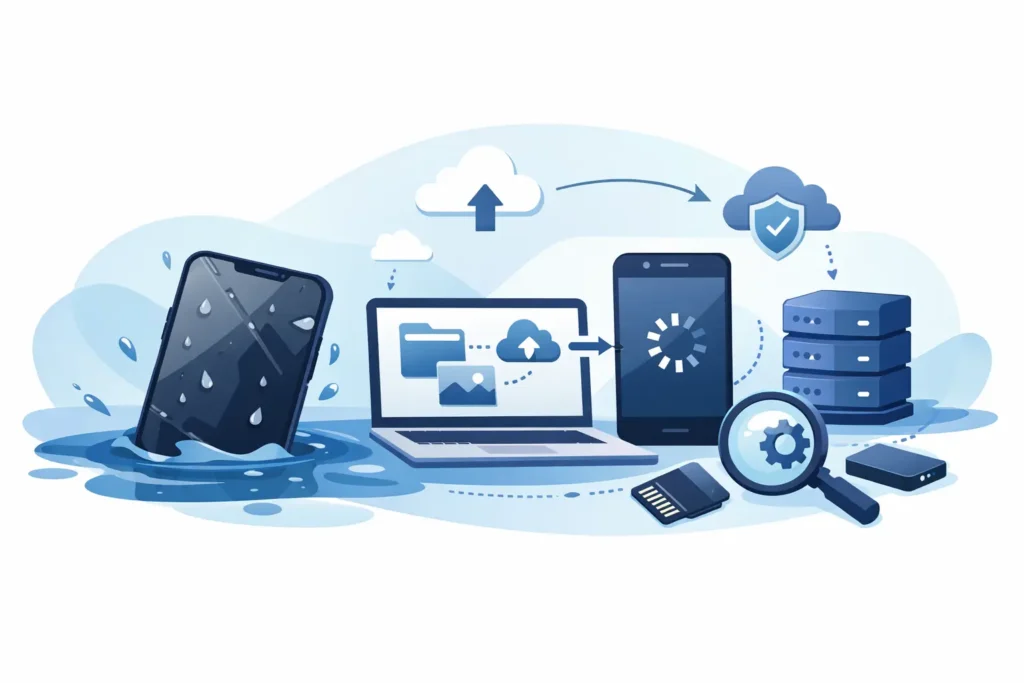
The moment a phone hits water, the real risk is not the splash. It is what happens in the minutes, hours, and days afterwards. Water damaged phone data recovery is often possible, but the difference between a recoverable handset and a permanent loss usually comes down to what was done next.
For many people, the concern is not the device itself. It is the family photos, business WhatsApp chats, client contacts, notes, videos, banking records, two-factor authentication apps, and work documents stored on it. For a business, a water damaged phone can interrupt access to operational messages, email history, and time-sensitive evidence. That is why speed matters, but so does restraint. A rushed mistake can reduce the chance of a successful recovery.
What actually happens inside a wet phone
Phones rarely fail because of water alone. The main issue is electrical damage and corrosion. If power is present while moisture reaches the board, short circuits can happen immediately. Even if the phone seems fine at first, liquid residue can continue to corrode connectors, chips, and solder joints over time.
Fresh water, salt water, sugary drinks, coffee, and cleaning fluids do not all behave the same way. Salt water is especially destructive because it is highly conductive and leaves corrosive deposits behind. Soft drinks and alcohol-based liquids can also create sticky contamination that damages components long after the phone has dried on the outside.
This is why a phone that powers on after getting wet is not automatically safe. In some cases, users continue charging or using it, only for the device to fail completely a day or two later. From a data recovery perspective, that delay can make the case more complex.
First steps for water damaged phone data recovery
If the phone has just been exposed to liquid, the first priority is to stop power from moving through a wet device. Switch it off if it is still on. Do not press buttons repeatedly to test it. Do not connect it to a charger. Do not plug it into a laptop. If the battery is removable, remove it. On most modern phones that is not possible, which makes professional handling more important.
Dry the exterior gently with a clean, lint-free cloth. Remove the SIM tray if accessible. Beyond that, avoid improvised fixes. Rice is the best-known example of bad advice that refuses to disappear. It does not remove contamination from under chips or connectors, and it can encourage people to wait while corrosion gets worse.
Heat is another common problem. Hairdryers, radiators and airing cupboards can warp components, push liquid deeper into the device, or accelerate residue damage. The goal is not to bake the handset back to life. The goal is to preserve the best possible chance of extracting the data safely.
Why DIY can make recovery harder
There is a place for sensible first aid, but there is a line between basic protection and amateur repair. Opening a modern smartphone without the right tools and experience can tear flex cables, damage waterproof seals, crack the display assembly, or disturb fragile board-level faults. That matters because, in many cases, data recovery does not depend on making the whole phone usable again. It depends on keeping the storage and board stable enough for controlled extraction.
Phones are also more complex than many people realise. On current iPhone and Android models, encryption is usually tied to the logic board, processor, and security architecture. Simply moving the memory chip to another phone often does not work. A successful recovery may require board repair at component level, power rail diagnostics, ultrasonic cleaning, connector restoration, and temporary stabilisation in a lab environment.
That is why generic repair and data recovery are not the same service. A high street repair shop may be good at replacing screens and batteries. Water damaged phone data recovery often needs forensic-grade handling, micro-soldering expertise, and a process designed around preserving data rather than restoring general functionality.
Can data be recovered from a water damaged phone?
Often yes, but it depends on several factors. The most important are the type of liquid, how quickly the phone was powered down, whether it was charged after exposure, how long it has been left untreated, and where the damage has occurred.
If the storage area and key board circuits remain recoverable, technicians may be able to repair the handset temporarily to the point where data can be imaged or exported. In other cases, the phone itself may never return to normal use, but the data can still be recovered. That distinction matters. Customers sometimes assume the job has failed if the handset cannot be restored. From a data recovery standpoint, the real objective is access to the files, contacts, messages and application data.
There are limits, and any honest provider should say so. Severe corrosion, multiple prior repair attempts, battery fires, physically fractured boards, or prolonged salt water exposure can reduce the odds sharply. Encryption can also create hard boundaries. If a device has critical board damage affecting the secure element or decryption pathway, recovery may not be possible. Anyone promising guaranteed success before assessment is overselling.
What a professional lab does differently
A proper recovery process begins with controlled assessment. The phone is inspected for liquid ingress, contamination, corrosion patterns, and signs of previous tampering. The aim is to understand whether the case requires cleaning, board repair, parts support, direct extraction, or a staged approach.
In lab conditions, contaminated boards can be cleaned using methods designed for electronics rather than household drying tricks. Damaged components may be repaired or replaced only where necessary to restore access. This is delicate work. On encrypted smartphones, one wrong move can turn a recoverable board into an unrecoverable one.
Professional handling also matters for confidentiality. Phones often hold far more than pictures and call logs. They may contain client information, legal material, private conversations, payroll records, access tokens and regulated personal data. A serious recovery provider should treat the device as a sensitive asset, not just another repair ticket. For private clients and business users alike, secure chain-of-custody, confidentiality controls and transparent quoting are not optional extras.
iPhone and Android recovery are not identical
iPhones and Android phones present different recovery paths. Apple devices tend to have tightly integrated security and storage design, which can make component-level board repair essential before any logical access is possible. Newer models are especially resistant to shortcut methods.
Android is a broader category, so outcomes vary by manufacturer and generation. Some devices allow easier data access if the board can be stabilised. Others use advanced file-based encryption and secure hardware that create similar challenges to iPhone recovery. Foldables and premium handsets can add another layer of complexity due to dense internal layouts and fragile connectors.
This is one reason template advice online is unreliable. The right approach for a five-year-old Android handset may be completely wrong for a recent iPhone. Proper diagnosis comes first.
When urgency really matters
Not every case is a same-day emergency, but many are time-sensitive. If the phone contains active business communications, legal evidence, travel documents, or irreplaceable personal media, delaying assessment can increase corrosion and reduce options. It is especially urgent if the device was exposed to salt water, chlorinated pool water, muddy water, or any liquid containing sugar or chemicals.
It is also worth acting quickly if you have already tried to charge the phone after exposure, or if it keeps vibrating, heating up, rebooting, or showing intermittent signs of life. Those symptoms can point to unstable power conditions that may worsen damage.
For customers in this position, a specialist lab with free assessment, clear fixed quotes and a no-recovery, no-fee model removes some of the risk from making the right decision early. At Data Recovery Lab, that is exactly how these cases are approached – with urgency, technical discipline and clear communication from the start.
How to choose the right recovery provider
If the data matters, choose a specialist based on lab capability, not marketing language. Ask whether they carry out board-level smartphone recovery in-house, whether they have real technical facilities, how they protect confidential data, and whether they can explain the likely path for your device without giving false certainty.
Be cautious of companies that only offer postal forwarding, vague pricing, or blanket success claims. Water damage cases are highly variable. A credible provider will usually need to assess the handset before confirming feasibility and cost. They should also be able to distinguish between repairing a phone for reuse and recovering the data from a failed phone, because those are different jobs with different priorities.
The best result is not always a working handset. Often, it is getting your photos, messages, notes and business files back safely, with a clear record of what was recovered and how the device was handled.
If your phone has been exposed to water, the smartest move is usually the simplest one – stop using it, do not charge it, and get it assessed before corrosion has more time to do its work. That one decision can make all the difference between panic and a proper recovery.
