
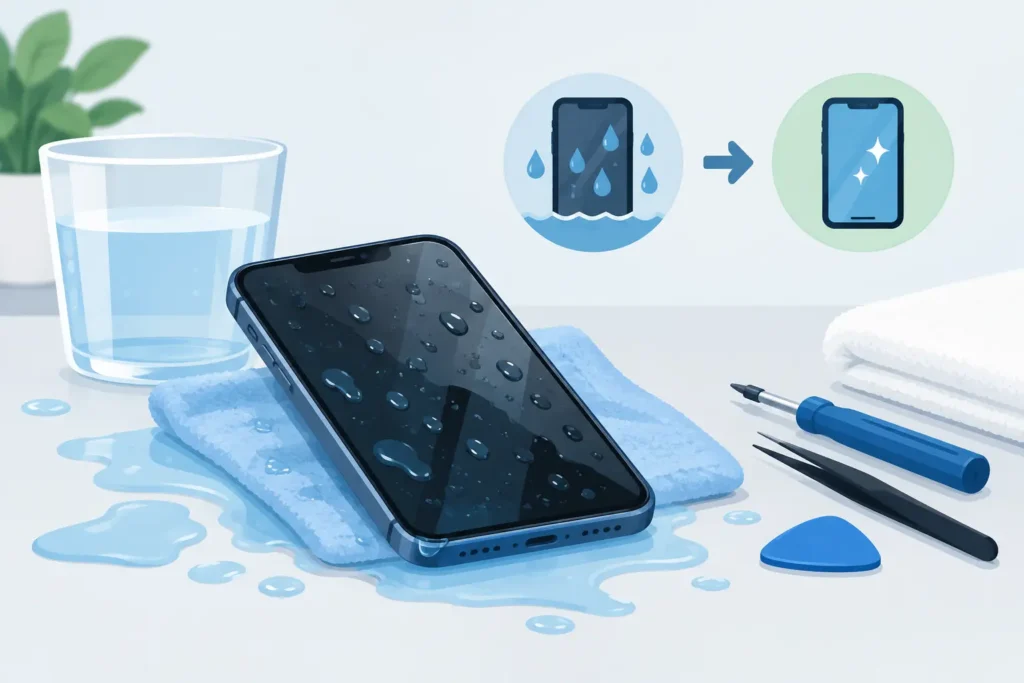
A phone dropped into a sink can look perfectly normal after it is dried, then fail days later when corrosion reaches the components that hold your photos, messages and business files. That delay is why the question, are water damaged phones recoverable, needs a more useful answer than a simple yes or no: often they are, but the actions taken in the first few minutes can materially affect the outcome.
The priority is not getting the handset working again. It is preventing further electrical and chemical damage, then preserving the best possible chance of recovering the data stored inside it.
Are water damaged phones recoverable after a spill?
In many cases, yes. Modern smartphones store data on soldered flash memory chips or integrated storage modules protected by the phone’s encryption system. Water does not necessarily erase that information. The greater threat is electrical shorting while the device has power, followed by corrosion that damages the circuits needed to access the data.
A successful recovery may mean repairing the phone sufficiently for it to boot and decrypt its own storage. In more serious cases, it can require board-level diagnostics and microsoldering to restore a damaged power circuit, display connection, charging line or other essential component. The correct route depends on the make, model, type of liquid, length of exposure and whether anyone attempted to charge or power on the handset afterwards.
Water resistance is not a guarantee of survival. Seals weaken through ordinary wear, previous repairs, drops and temperature changes. A handset rated for brief clean-water exposure can still suffer damage if liquid enters through a compromised seal or remains inside the device.
The first hour matters more than most people realise
If the phone is still on, switch it off immediately if you can do so without repeatedly pressing buttons. Remove the case, SIM card and any accessible memory card. Pat the exterior dry with a clean, lint-free cloth, keeping the charging port facing down where possible.
Do not connect a charger, wireless charger, computer or power bank. Charging a wet phone is one of the most damaging actions because it sends current through components that may already be bridged by moisture. Do not keep trying the screen, fingerprint sensor, camera or buttons to see what still works. Each test can create another opportunity for a short circuit.
Avoid the familiar home remedies. Rice does not remove contamination from beneath chips or connectors, and grains or dust can enter ports. Hairdryers, radiators and ovens can warp seals, damage batteries and accelerate corrosion in the wrong places. Compressed air may force liquid deeper into the device.
If the liquid was seawater, a fizzy drink, coffee, wine, pool water or anything sugary, acidic or salty, the risk is considerably higher than with clean tap water. These liquids leave conductive residue behind even after visible moisture has evaporated. Treat the device as urgent and arrange a professional assessment as soon as possible.
Why a phone can fail after it seems to have recovered
A phone may switch on after a spill, make calls and even charge for a short period. That is not evidence that it is safe. Liquid damage often develops in stages.
First, moisture can cause an immediate short circuit. Later, minerals and contaminants begin corroding tiny contacts, under-chip connections and power-management circuitry. A phone that appears fine on Monday can lose touch response, restart repeatedly or become completely unresponsive by Friday. The longer it remains powered, the more heat and electrical activity can compound the damage.
If the phone is functioning after water exposure, back up essential data straight away only if it can be done without charging or prolonged use. Save irreplaceable photographs, contacts, authenticator codes, work documents and messaging data to a secure location. Then stop using the handset and have it inspected. A replacement phone is easy to obtain; a unique set of family videos or confidential client files is not.
What determines whether phone data can be recovered?
The decisive question is usually not whether the glass is cracked or the screen is black. It is whether the storage and the components required to decrypt it can be made operational long enough to access the files.
The phone model and security design
Current iPhones and many Android devices use hardware-backed encryption. Their storage is tied to the original logic board and security hardware. Simply removing a memory chip and reading it elsewhere will rarely produce usable files, because the data remains encrypted.
That is why reputable recovery work on modern smartphones focuses on preserving and repairing the original board rather than performing a crude chip swap. A technician may need to restore specific circuits while retaining the device’s security relationship with its storage. This work requires specialist equipment, accurate diagnosis and controlled handling.
Older Android handsets, or devices with removable microSD cards, can present different possibilities. A memory card may be recoverable separately, provided it has not been overwritten or physically damaged. However, do not attempt to clean card contacts aggressively or insert a wet card into another device.
What entered the phone
Clean water can still cause damage, but contaminated liquid is harder on electronics. Saltwater is particularly aggressive because it is conductive and corrosive. Drinks and washing-up water leave residue. Toilet water and floodwater also introduce a hygiene issue, so the phone should be isolated and handled with appropriate precautions.
Power, time and previous repair attempts
A phone that was switched off immediately generally has better prospects than one repeatedly restarted or charged. Time matters too: corrosion continues while contamination remains on the board.
Untrained repair attempts can make data recovery harder. Heat applied to the board, indiscriminate ultrasonic cleaning, replacement of paired components, or a factory reset can turn a recoverable case into a permanent loss. A standard repair shop may reasonably focus on making a phone usable again. Data recovery is a different objective and requires different decisions, especially where the data is more valuable than the handset.
When a black screen does not mean lost data
A black screen after water exposure is often caused by a failed display, backlight circuit, connector or battery issue. The storage may still be intact. Likewise, a phone that vibrates, rings or appears on a computer but cannot be unlocked may contain recoverable information.
Do not authorise a repair that wipes the handset, replaces the original logic board or treats a reset as routine troubleshooting if the data matters. Ask specifically whether the proposed work preserves the original board and whether recovery of data, rather than device repair, is the primary aim.
For business users, this distinction can be critical. A water-damaged work phone may hold two-factor authentication access, client conversations, field photographs, case records or evidence that has not reached central storage. Maintain a clear chain of custody, avoid sharing passcodes unnecessarily and use a recovery provider that can handle sensitive information confidentially.
What professional water-damage recovery involves
A proper assessment starts with the device’s condition and the value of the data, not a promise that every phone can be restored. Technicians inspect for liquid indicators, corrosion and damage around power, charging, display and storage-related circuits. The board may be cleaned using controlled processes, then tested with specialist diagnostic equipment.
Where necessary, a technician can carry out precision board-level repair to make the original device stable enough to boot. If it starts, the goal is normally to extract the required data promptly rather than return the phone to everyday service. A recovered device may remain unreliable after liquid exposure, even if it appears to work.
At Data Recovery Lab, water-damaged phones are assessed with the data recovery objective in mind, using specialist lab techniques rather than guesswork. For confidential personal or corporate information, secure handling, transparent assessment and a clear explanation of realistic options should be non-negotiable.
When recovery may not be possible
There are limits. Severe board corrosion, destroyed storage circuitry, a damaged processor or security component, and overwritten data can prevent recovery. A phone that has been factory reset after the incident may also be substantially more difficult or impossible to recover, particularly where encryption is involved.
The passcode matters on many modern devices. Technicians cannot bypass strong device encryption simply because the phone has suffered water damage. If you know the passcode, keep it available for the recovery process but provide it only through an agreed secure method.
Do not write the phone off because it will not turn on, and do not be reassured because it does. Switch it off, keep it uncharged, avoid home fixes and seek assessment before corrosion has more time to turn a repairable fault into a permanent data loss.
