

Learn RAID Data Recovery Services in London | Expert Server Data Retrieval Solutions
RAID data recovery is a critical yet often misunderstood service that involves retrieving data from RAID (Redundant Array of Independent Disks) systems that have failed or become unusable. Organisations relying on these systems can face significant challenges when attempting to recover data due to the intricate configurations that RAID offers. Understanding the types of RAID, their recovery challenges, and the recovery processes is essential for businesses experiencing data loss. This article will provide a comprehensive insight into RAID data recovery services available in London, the specific challenges associated with various RAID types, and what clients should expect from these services. Key sections will include the general recovery process, specialized techniques for nested RAID arrays, and an overview of transparency in service pricing.
What Are the Key Types of RAID and Their Recovery Challenges?
RAID systems enhance data storage reliability and performance, but each type presents unique recovery challenges. The most common types include:
- RAID 0: Offers improved performance through striping but has no redundancy. If one disk fails, all data is lost.
- RAID 1: Mirrors data across disks, providing redundancy. Recovery involves reconstructing data from the surviving disk.
- RAID 5: Uses striping with parity for data recovery. A single disk failure is recoverable, but multiple simultaneous disk failures complicate the process.
- RAID 6: Similar to RAID 5 but with double parity, offering more resilience against failures. However, recovery after multiple disk failures can be complex.
The challenges in recovery vary significantly, influenced by RAID configuration complexity and the nature of the data loss.
RAID Techniques: Protection Against Disk Failure and Data Loss
Disk striping techniques [1,2] have been used for more than two decades to reduce dataloss due to disk failure, while improving performance.The commonly used RAID techniques, RAID-4 and RAID-5, protect against only a single diskfailure.Among the standard RAID techniques, only mirrored stripes (RAID-10, RAID-01) provideprotection against multiple failures. However, they do not protect against doubledisk failures of opposing disks in the mirror.Mirrored RAID-4 and RAID-5 protect against higher order failures [4].However, the efficiency of the array as measured by its data capacity divided by its total disk space is reduced.Increasing the redundancy by small increments per stripe is more cost effective thanadding redundancy by replicating the entire array [3].
Row-diagonal parity for double disk failure correction, P Corbett, 2004
Data Recovery Lab provides expert RAID data recovery services tailored to handle these challenges effectively.
General Recovery Process
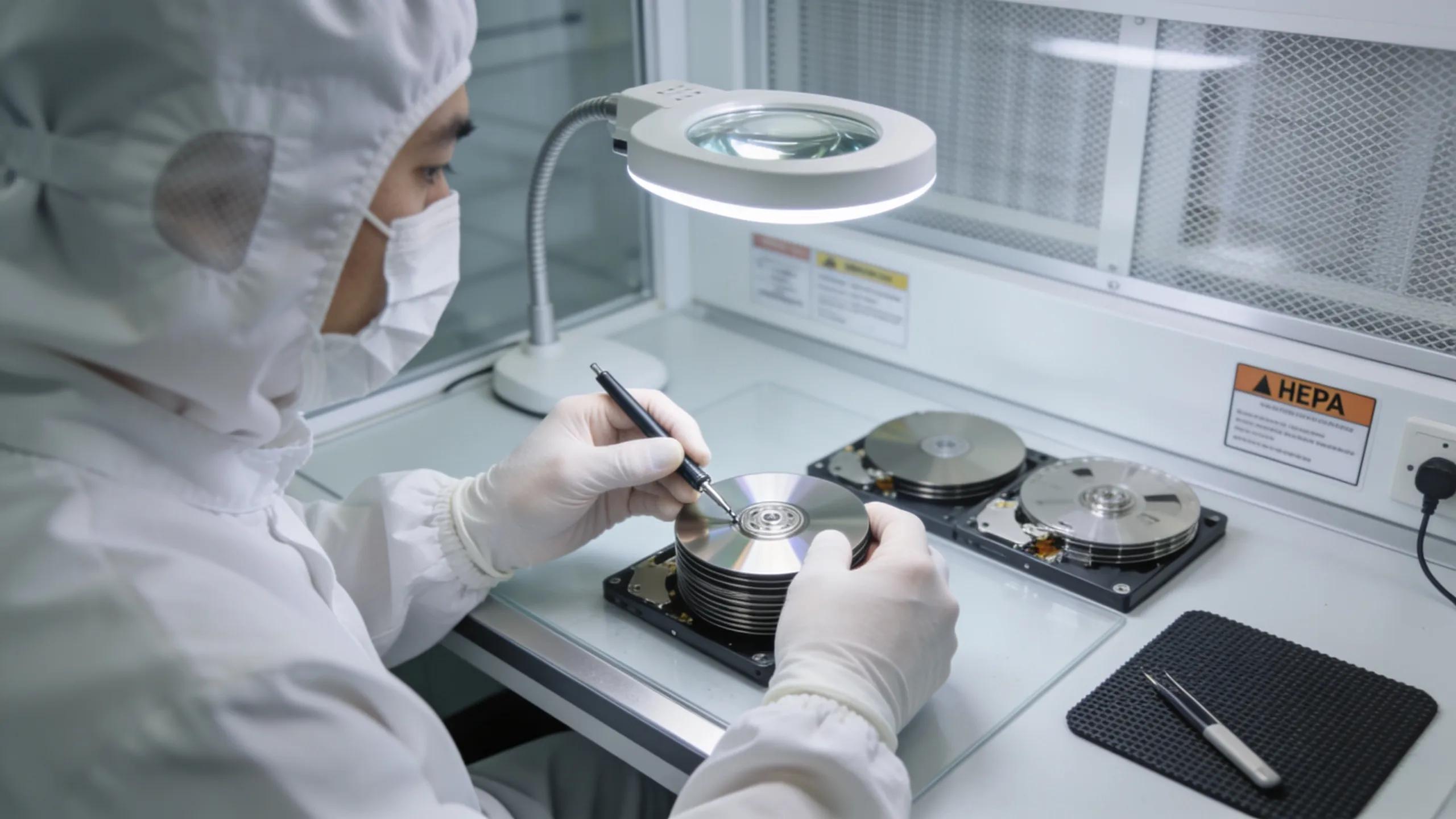
The standard RAID data recovery process typically follows these key steps:
- Initial Evaluation: The first step involves diagnosing the RAID setup and the nature of the failure to determine the best recovery approach.
- Imaging Strategy: A complete image of the RAID array is created to analyse the data without risking further damage.
- Data Extraction Methodology: After imaging, specialized software and tools are employed to extract and restore lost data.
This structured approach ensures a thorough understanding of the situation and maximises recovery chances, making the recovery process more efficient.
What Are Nested RAID Arrays and Why Do They Require Specialized Recovery?
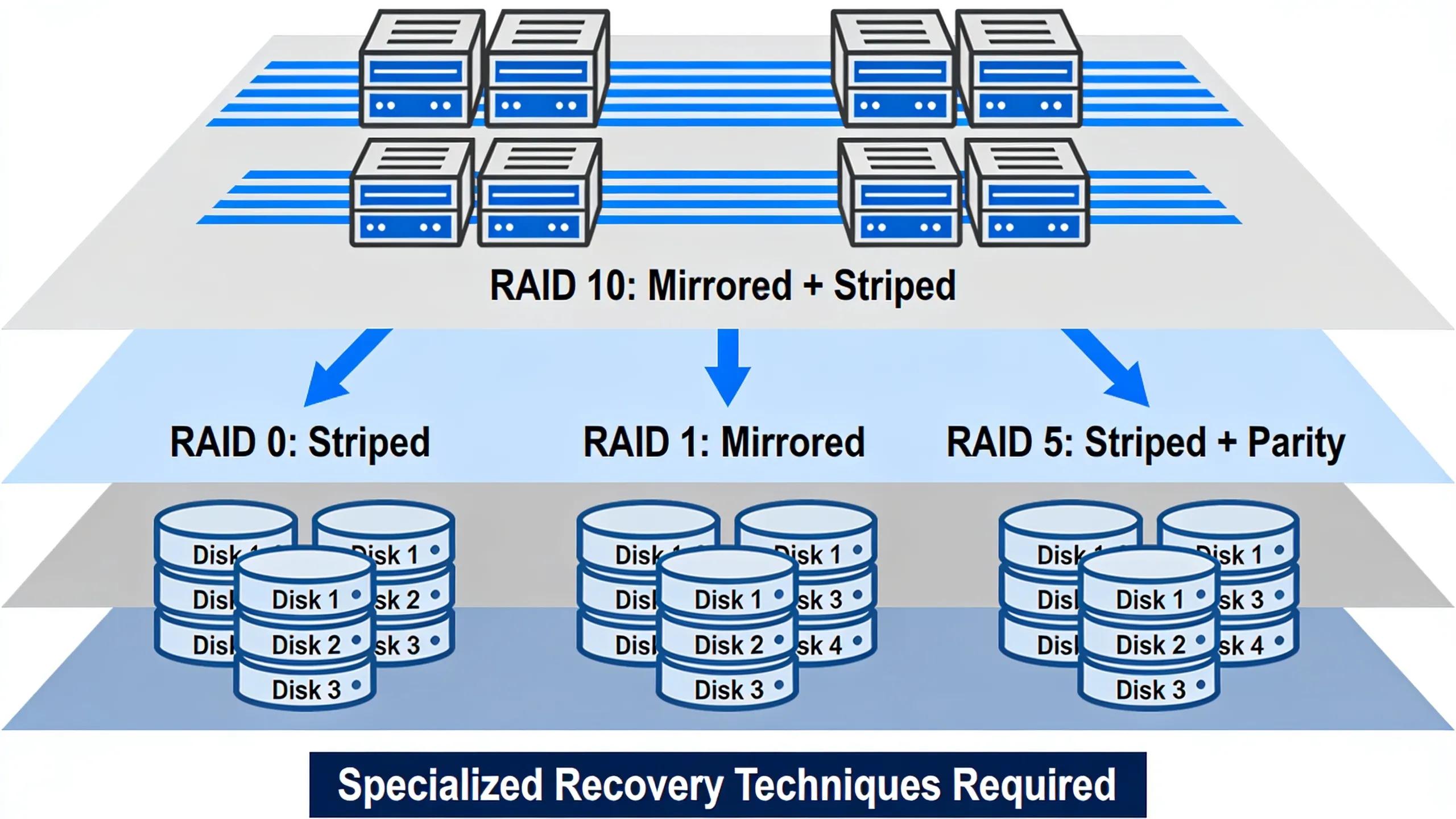
Nested RAID arrays, such as RAID 10, combine multiple RAID configurations, creating additional complexity for data recovery. The intertwining of RAID levels increases the potential points of failure, requiring specialized techniques and tools for successful recovery.
These specialized methods are crucial for ensuring that data is not corrupted during the recovery process and can often involve deep analysis of both the logical and physical aspects of the nested RAID system.
How Does RAID Data Recovery Work in London’s Advanced Server Environment?
In London’s advanced server environment, RAID data recovery incorporates cutting-edge technology and practices to maximise recovery effectiveness. The recovery process typically involves the following components:
- Cleanroom Labs: Many data recovery services utilize cleanroom environments to eliminate airborne contaminants that could damage sensitive data recovery processes.
- Advanced Software: Utilizing state-of-the-art software helps recover data from malfunctioning disks while maintaining data integrity.
This comparison illustrates the specific needs and tools required for successful RAID recovery, adapting the approach based on the RAID configuration and the nature of the data loss.
What Should You Expect Regarding Pricing, Guarantees, and Service Transparency?
When engaging RAID recovery services, customers can expect upfront clarity regarding costs related to the recovery process. Key points include:
- Cost Structure: Pricing usually varies based on the complexity of the recovery, with higher costs associated with more complex RAID configurations.
- Guarantees: Most reputable providers offer guarantees such as “No Data, No Fee”, ensuring customers only pay for successful recoveries.
- Transparency: Clear communication about the recovery process and expected timelines is vital for customer confidence.
Understanding these factors can help clients make informed decisions and prepare for the financial aspects of data recovery.
How Does ‘No Data, No Fee’ Guarantee Protect Your Investment?
The “No Data, No Fee” guarantee is a hallmark of trusted data recovery services. This policy ensures that clients are protected against financial loss in case the data cannot be recovered. By providing this assurance, companies like Data Recovery Lab instill confidence in their clients that they are making a sound investment in the recovery process.
This guarantee enables businesses to seek necessary recovery services without the fear of incurring costs for unsuccessful attempts, reinforcing trust in the service providers.
What Are Typical Cost Factors for RAID and Server Recovery Services in London?
Several factors influence the cost of RAID and server recovery services in London:
- Complexity of Failure: More intricate failures, such as total disk failure or multiple disk malfunctions, typically incur higher costs.
- Type of RAID Configuration: The specific RAID setup can greatly influence recovery pricing due to varying levels of complexity in processing.
- Time Required for Recovery: Lengthier recovery processes may lead to higher expenses, especially if specialized equipment is necessary.
Understanding the typical pricing models helps clients to budget for potential recovery needs effectively.
How Can Real London Clients Benefit From Trusted RAID and Server Data Recovery?
Engaging a trusted RAID data recovery service in London offers numerous benefits for clients facing data loss:
- Expediency: Professional services can recover data quickly, minimising downtime for businesses.
- Expertise: Specialist recovery services have the knowledge and experience to address complex situations that a layperson might overlook.
- Security: Reputable companies provide guarantees and ensure that data security protocols are strictly followed during the recovery process.
By utilizing these services, clients can regain access to critical data while ensuring minimal disruption to their operations.
