
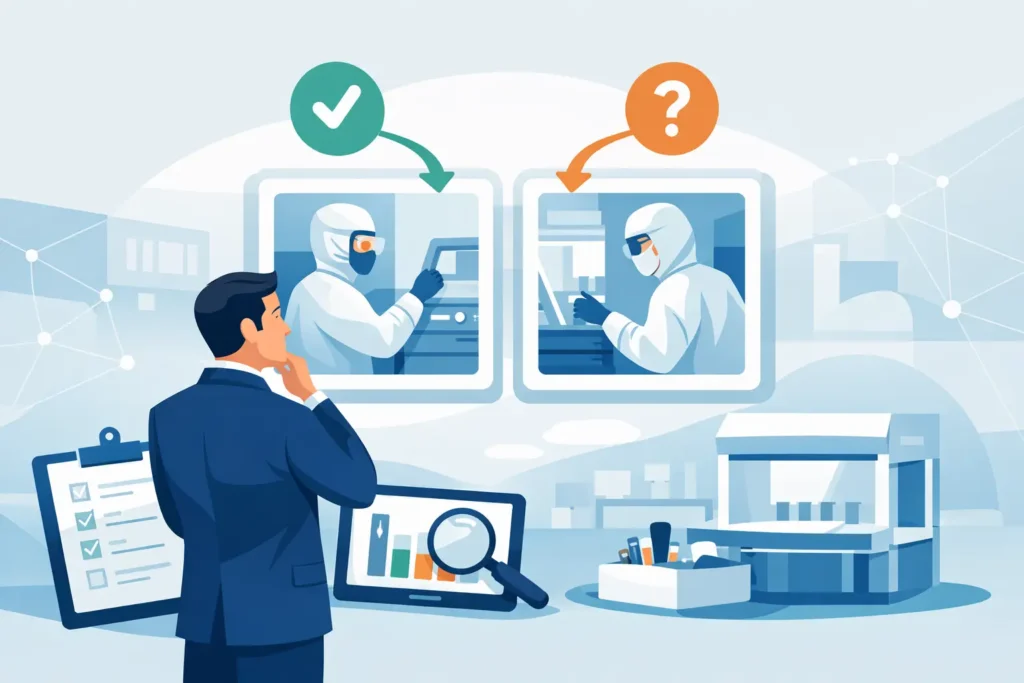
A hard drive that starts clicking, stops spinning, or vanishes from your system is not a routine IT nuisance. It is often a physical failure, and that is exactly when a cleanroom recovery company becomes relevant. If the drive has internal damage, every extra power cycle, every improvised repair attempt, and every delay can reduce the chance of a successful recovery.
That point gets missed far too often. Many customers are told that any shop offering data recovery can handle a failed drive. That is not always true. Logical recovery and physical recovery are different disciplines. Recovering deleted files from a healthy device is one thing. Opening a mechanically failed hard drive and stabilising damaged components without contaminating the platters is another.
What a cleanroom recovery company actually does
A cleanroom recovery company handles storage devices that cannot be safely worked on in a normal office, repair counter, or back room. Traditional hard disk drives contain delicate internal components with extremely tight tolerances. Once the lid is removed, the drive is exposed to airborne particles, static risk, and handling errors that can make existing damage worse.
In practical terms, cleanroom work matters when the problem is mechanical or environmental rather than purely digital. That includes failed read/write heads, seized spindle motors, platter damage, firmware complications linked to head instability, and drives affected by water, fire, impact, or electrical events. The clean environment is only one part of the job. The real value is the combination of controlled conditions, specialist tools, donor part matching, firmware knowledge, and disciplined imaging procedures.
This is where buyers need to be careful. Some companies use the word cleanroom as a marketing label, even when they are outsourcing the difficult work or using a general electronics bench. Others may have technical ability but provide very little clarity about where the drive actually goes, who handles it, or what happens if the recovery becomes more complex than expected.
When you need a cleanroom recovery company
Not every failed device belongs in a cleanroom. SSDs, phones, USB flash drives, and memory cards usually involve different recovery methods because they do not rely on spinning platters and heads in the same way as mechanical hard drives. For those devices, controller faults, degraded NAND, encrypted file systems, or board-level issues are often the real challenge.
A cleanroom recovery company is most relevant for HDDs and some enterprise storage scenarios where failed mechanical disks sit inside RAID, NAS, or SAN environments. If your hard drive is making unusual noises, has suffered a drop, has been opened already, or has stopped being recognised after signs of physical distress, the cleanroom question becomes urgent.
There is also an important grey area. A drive may appear to have a software issue but actually be deteriorating physically. Slow access, freezing during file copies, repeated disconnections, and partial detection in BIOS can point to unstable heads or developing media damage. In those cases, a proper lab assessment matters more than guesswork.
Why cleanroom capability is only part of the picture
The phrase cleanroom recovery company sounds reassuring, but it should not be the only filter you use. Clean conditions do not guarantee a successful outcome. They simply create a safer environment for certain physical procedures.
What usually separates strong providers from weak ones is process. A serious lab starts by protecting the original media. It assesses the device, identifies whether the fault is logical, electronic, firmware-based, or mechanical, and chooses the least invasive route to recover the data. If internal work is necessary, that work should be tightly controlled and followed by sector-level imaging to stable target media before any file reconstruction begins.
This order matters. You do not want a provider repeatedly experimenting on the original drive when the contents are unstable. You want a methodical lab that knows when to stop, when to change strategy, and how to preserve recoverable sectors before degradation spreads.
For business clients, there is another layer. If the failed disk sits inside a RAID or multi-disk storage system, the job is not simply about repairing one mechanism. The lab also needs to understand array behaviour, parity structure, degraded rebuild risk, virtual layer issues, and the possibility that more than one member disk has faults. Cleanroom capability helps, but enterprise recovery requires broader forensic and storage expertise.
How to judge a cleanroom recovery company properly
The first test is legitimacy. Can you identify where the lab is, who is doing the work, and whether the company is genuinely set up for specialist recovery rather than acting as a broker? A real facility, trained technicians, and transparent handling procedures matter because outsourcing introduces delay, uncertainty, and chain-of-custody concerns.
The second test is technical scope. Ask whether the company handles mechanical HDD recovery, SSD recovery, RAID recovery, mobile recovery, and encrypted or corrupt file systems in-house. A provider with broad capability is often better equipped to diagnose edge cases correctly. Data loss does not always fit a neat category, and misdiagnosis at the start wastes precious time.
The third test is commercial transparency. Under stress, people accept vague promises far too easily. A trustworthy lab should offer clear assessment terms, fixed quotation practices where possible, and a no-recovery, no-fee policy that genuinely reduces your risk. If pricing is evasive or escalates without explanation, confidence should drop quickly.
The fourth test is confidentiality. For personal devices, that means private family photos, financial documents, messages, and work files. For businesses, it can mean legal records, client data, databases, intellectual property, or CCTV evidence. GDPR-compliant handling, secure storage, and controlled access to recovered data are not optional extras. They are part of the service.
Questions worth asking before you hand over a drive
A good cleanroom recovery company should be comfortable answering direct questions. Where will the device be examined? Is the work performed in-house? What signs suggest physical failure? What is the likely turnaround time? Will you receive a fixed quote after assessment? What happens if donor parts are needed? How is recovered data returned? How is confidentiality protected?
You are not being difficult by asking these questions. You are checking whether the company behaves like a specialist lab or a generic repair service. The difference is significant, especially when the data is commercially sensitive or emotionally irreplaceable.
It is also worth asking what not to do while the device is waiting for collection or delivery. The right answer is usually simple: stop using it, do not run repair utilities, do not open it, and do not freeze it. Old myths still circulate, and they still destroy recoverable data.
The trade-off between speed, cost and recovery chances
Customers often want three things at once: the lowest price, the fastest turnaround, and the highest chance of success. In real recovery work, those priorities can conflict.
Emergency handling can be essential for a business outage, legal deadline, or production stoppage, but priority work places pressure on lab scheduling and donor sourcing. Complex mechanical cases can require time-consuming diagnostics and multiple controlled stages. Equally, the cheapest option is rarely the safest when a physically damaged drive needs specialist intervention.
That does not mean high price automatically signals quality. It means you should look for justified pricing tied to real lab work, skilled technicians, secure handling, and a disciplined process. If a quote seems suspiciously low for serious physical recovery, there is usually a reason.
Why trust matters more than marketing
In this sector, distressed customers are easy to exploit. Some providers rely on fear, vague technical language, or hidden handoffs to third parties. Others advertise cleanroom facilities without showing evidence of real operational depth. That is why trust must be earned through specifics, not slogans.
A credible company explains what it can do, what it cannot promise, and how it reduces your risk. It does not guarantee recovery where the media may be too badly damaged. It does not encourage repeated power-on attempts just to confirm failure. It does not blur the line between diagnosis and sales pressure.
That measured approach is usually the safer one. The best labs are confident because they know the work, not because they overstate it.
For anyone facing a hard drive failure, choosing a cleanroom recovery company is really about choosing controlled conditions, proven process, and people who understand what is at stake. When the data matters, calm expertise is worth more than a quick promise.
